Syracuse Cathedral: A Greek Temple Behind a Baroque Facade
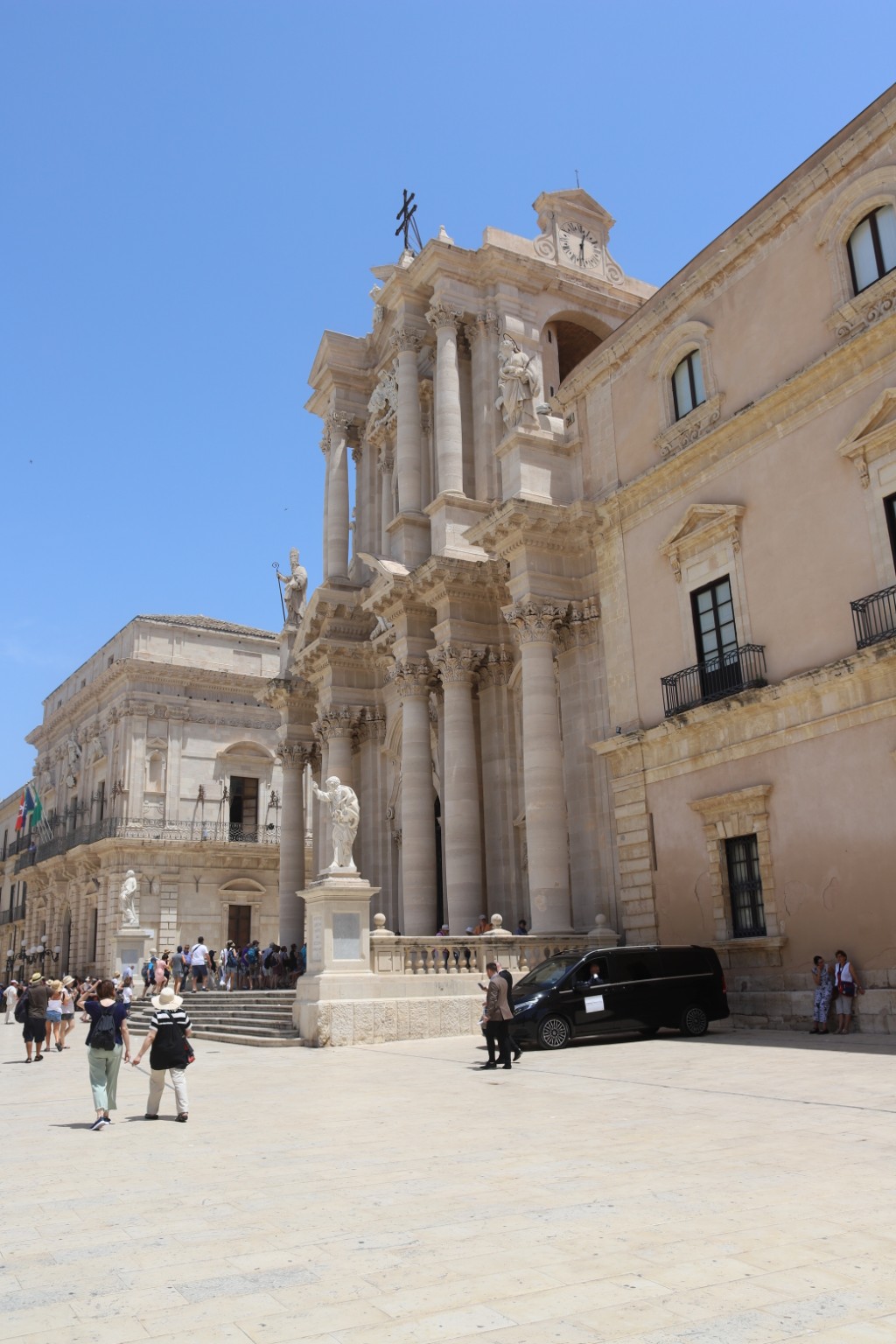
The Cathedral of Syracuse, standing in Piazza Duomo on the island of Ortigia, is one of those buildings that makes you wonder whether architecture was once a more ambitious profession. Its limestone columns, sculpted saints and theatrical Baroque facade seem almost excessive beneath the brilliant Sicilian sky. Yet the whole composition works. The pale stone glows in the Mediterranean sunshine, and the blue sky provides a backdrop no architect could improve upon.
The cathedral's history reaches far beyond the Baroque period. It incorporates the ancient Greek Temple of Athena, erected in the fifth century BC after Syracuse's victory over Carthage at Himera. Massive Doric columns from the temple survive within the church walls. A pagan sanctuary became a Christian place of worship, changed over centuries and eventually acquired the facade that draws visitors today. It is not merely a building on top of an archaeological site; the archaeology is the building.
The facade was rebuilt in the eighteenth century after the devastating earthquake of 1693. Architect Andrea Palma gave it the columns, niches, statues and restless stonework characteristic of Sicilian Baroque. Unlike churches crammed into narrow streets, this one has the luxury of a broad square. You can actually stand back and see it, which is not always possible in Italy.
In this photograph, tourists wander toward the entrance while others linger in the fierce midday sun. A black van and a couple of people in modern clothes are almost funny beside the towering stone saints. The clock above the facade, the balconies on the adjoining building and the broad sweep of pavement remind us that Piazza Duomo is a working urban space, not a stage set cleared for tourists.
Ortigia's appeal lies in precisely that mixture. Around the cathedral are apartments, cafes, shops, narrow lanes and the sea, never very far away. Come for the extraordinary facade, go inside to find the ancient Greek columns, then leave time to wander without a plan. The square is particularly beautiful when the afternoon light softens and the limestone turns warmer. Nearly 2,500 years of Mediterranean history sit here in plain sight, with everyday life carrying on around them.
Photograph hosted by MediaGallery.org.