Vienna's Maria Theresa Square and the Art of Imperial Grandeur
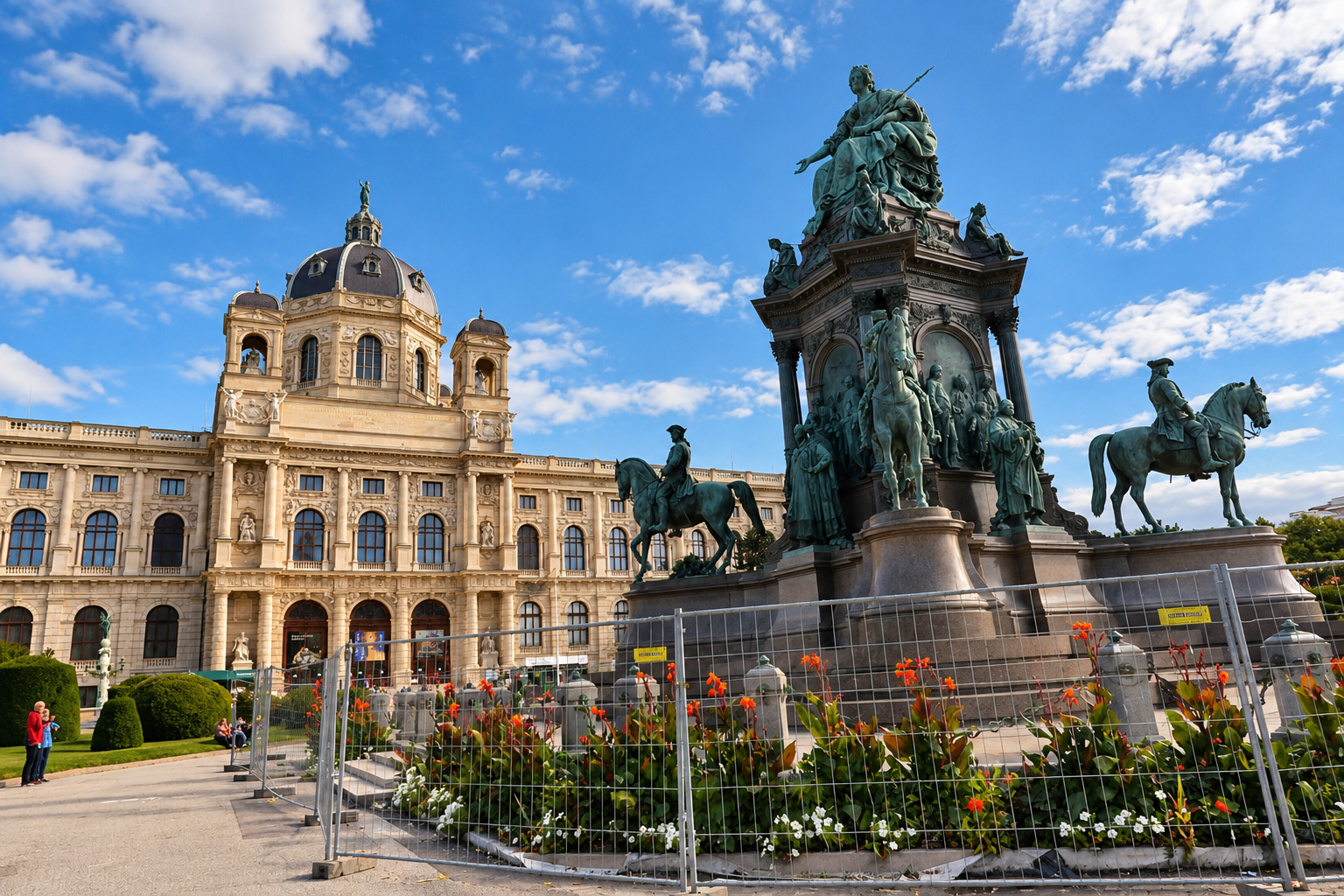
Vienna has a remarkable talent for making history feel physically enormous. Walk into Maria-Theresien-Platz, the broad square between the city's two great museum buildings, and the first thing that strikes you is the scale. The facades stretch across the horizon, the dome rises above the rooftops, and at the center sits Maria Theresa, elevated above an elaborate assembly of figures and mounted commanders. It is not a monument designed to be overlooked.
The square occupies a particularly theatrical stretch of the Ringstrasse, the grand boulevard that reshaped Vienna in the nineteenth century. On one side stands the Kunsthistorisches Museum, devoted to art and historical collections; opposite it is the Naturhistorisches Museum, devoted to the natural world. Their near-matching architecture gives the square a sense of deliberate symmetry, as though two immense palaces were built to frame a single public room.
And that room has a formidable centerpiece. The Maria Theresa Monument, unveiled in 1888, commemorates the Habsburg ruler who reigned from 1740 to 1780. She was a sovereign whose political and administrative influence extended far beyond Vienna. The monument presents her as the commanding center of an imperial world, surrounded by advisers, military leaders and allegorical figures. Its bronze surfaces, weathered into green and dark tones, provide a striking contrast with the pale stone of the museums.
What I particularly like about this view is the competition between the monument and the museum dome. Neither quite submits to the other. The equestrian figures extend the sculpture horizontally, while the domed building anchors the other side of the composition. Even the temporary fencing and flowers in the foreground have their place. They remind us that a historic square is not a museum display sealed away from daily life. It is a working public space, subject to repairs, seasons and ordinary practicalities.
The sky can completely change the character of the place. Under low clouds the bronze figures become silhouettes, almost severe. With more light, the carved stone and sculptural details emerge, and the whole square feels unexpectedly welcoming. It is a good reminder that travel photography is not always about finding an empty postcard view. Sometimes the interesting picture is the one in which architecture, weather and the untidy present all meet.
Visitors often hurry between Vienna's famous museums, the Hofburg and the nearby shopping streets. Maria-Theresien-Platz deserves a slower crossing. Walk around the monument, look back toward both museum facades, and pay attention to how the proportions change from one corner to another. Vienna rewards that kind of wandering. Its grandest spaces were carefully planned, but the pleasure of discovering them remains wonderfully unscripted.
Photo credit: Pxef.com.