Belém, Where Lisbon Keeps Its Seafaring Memories
Photograph hosted by Pxef.com.
Belém, Where Lisbon Keeps Its Seafaring Memories
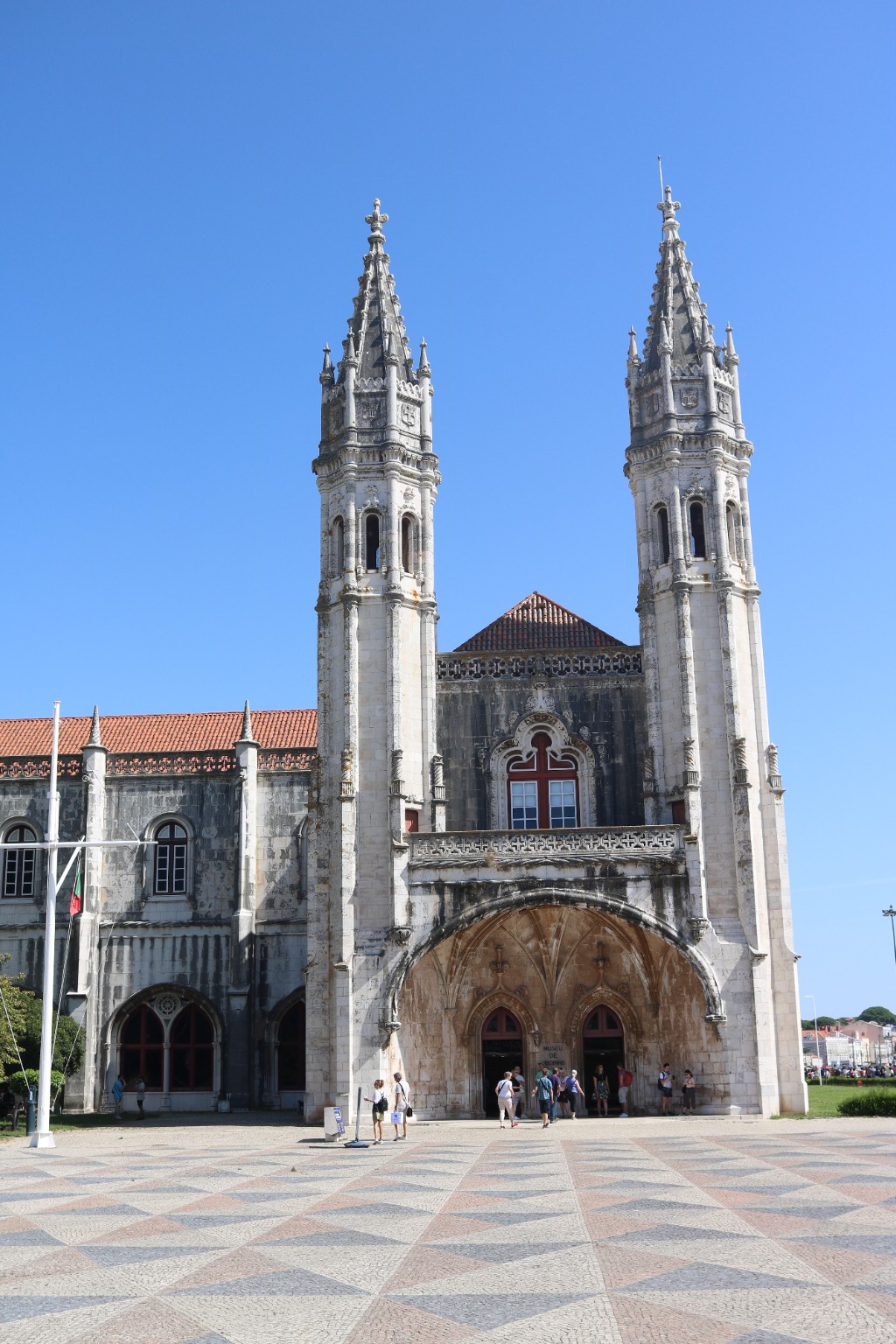
There are parts of Lisbon that seem to have been designed to make visitors look upward. Belém is one of them. The district is famous for its riverfront monuments and its association with Portugal's great voyages, but its quieter architectural surprises can be just as rewarding. Walk past the crowds heading for Jerónimos Monastery and you encounter a pair of extravagantly carved stone towers framing the entrance to the Maritime Museum. Against a cloudless blue sky, they look almost theatrical.
The towers in this photograph belong to the western wing of the Jerónimos complex, where the Museu de Marinha, Portugal's Maritime Museum, occupies part of the historic buildings. Their narrow pointed spires, decorative pinnacles, arched openings and weathered limestone have the confidence of an age that wanted architecture to tell stories. The symmetry is striking, although the surfaces are anything but simple. Even from across the patterned pavement, the eye keeps finding another flourish in the stone.
The building is a fitting doorway into Portugal's maritime past. From Belém, ships once departed along the Tagus toward the Atlantic, and the neighborhood remains closely tied to the voyages that transformed Portugal into a seaborne empire. Those expeditions brought navigational knowledge, trade and cultural encounters, but also conquest, coercion and colonial exploitation. A museum devoted to this history is most interesting when it leaves room for all of those realities, rather than reducing centuries of human experience to a parade of heroic ships.
There is a particular pleasure in seeing the museum from outside before going in. The wide open square gives the architecture breathing room. Small groups of visitors gathering beneath the vaulted entrance provide a useful sense of scale: the towers seem taller and more elaborate once ordinary people stand beside them. The reddish tiled roofs, darkened masonry and pale carved stone create a combination that feels unmistakably Portuguese. And the blue sky does its part, perhaps a little too enthusiastically for anyone trying to photograph detail in the highlights.
Belém deserves time rather than a rushed checklist. The monastery, the riverside Monument to the Discoveries, Belém Tower and the museum all speak to overlapping chapters of the city's history. Yet the experience is not only about monuments. It is also about walking between them, watching the light change on limestone, stopping for coffee and a pastel de nata, and noticing how an ordinary afternoon continues around buildings that have outlived generations.
The Maritime Museum entrance makes a good reminder that the most memorable travel photographs are not necessarily made at the destination's single most famous viewpoint. Sometimes the best subject is a facade you encounter on the way to somewhere else. In Belém, even the doorway to history deserves a long look.